

The main difference is where the work sits
A marketplace supplies a shared shopping destination, discovery tools, checkout, and a set of seller services. In exchange, sellers follow platform rules and pay fees that can depend on product category, order value, fulfilment method, shipping distance, and other factors. Competition is visible alongside other sellers, so listing quality, price, availability, and service all matter.
An owned ecommerce website gives a business greater control over its brand presentation, content, customer journey, and first-party marketing choices. The seller also has to attract visitors, maintain the storefront, arrange payment and delivery workflows, and provide customer service. The better channel depends on whether the business is ready to take on those jobs and what its customers expect.
Selling on Flipkart
Flipkart offers access to a large, established shopping marketplace and seller tools for listing, fulfilment, payments, and support. That can help a seller test demand without first building a standalone ecommerce site and its audience. A marketplace listing still needs accurate product data, competitive pricing, stock discipline, timely dispatch, and a plan for returns. Visibility and sales are not guaranteed.
Do not estimate Flipkart costs from a single commission percentage. Its published fee structure includes several components, and the amounts can vary with category, selling price, shipping method, weight, and delivery zone. Check the [current Flipkart fees and commission schedule](https://seller.flipkart.com/fees-and-commission) and seller dashboard for the rate that applies to each product. Recheck before changing prices because published rate cards can be updated.
Other marketplaces
Amazon and other marketplaces offer their own shopper audiences, fulfilment choices, seller rules, and fee schedules. Amazon describes its seller charges as a combination of referral, closing, shipping or weight-handling, and other applicable fees. The exact total depends on product and fulfilment details, so compare the same product and assumptions in the [Amazon India fees and pricing tools](https://sell.amazon.in/fees-and-pricing).
Marketplace reach can make customer acquisition easier to start, but sellers have less control over the overall storefront and must operate within each platform's policies. When listing on more than one marketplace, account for the extra work of keeping product information, stock, prices, dispatch commitments, and returns accurate on each one.
Building your own ecommerce website
A direct-to-consumer website gives a business more room to tell its story, publish useful content, design its product pages, and shape the shopping experience. It can also support consent-based customer communication and loyalty activity. That control takes ongoing work: the seller needs to earn traffic through search, social, partnerships, email, or paid marketing and build buyer confidence with clear policies and dependable fulfilment.
The website's cost is more than its subscription. Include the domain, platform plan, payment processing, apps, design and maintenance, advertising, shipping, returns, and the time spent on customer support. Hosted services publish plan and payment-provider charges that change over time; check the [current Shopify India pricing](https://www.shopify.com/in/pricing) or the selected platform's own pricing page instead of relying on an old monthly estimate.
Compare the contribution from each order
Compare channels using the same product, selling price, shipping assumptions, and return rate. A useful starting point is: contribution per order = amount received − product cost − platform and payment fees − fulfilment and shipping − discounts − expected return cost − advertising cost. Add taxes and operating costs where they apply to your accounting method.
The calculation separates apparent reach from profitable orders. A marketplace may bring more visits but add higher per-order fees; an owned website may avoid marketplace commission but require more spending to bring in each visitor. Track visits, conversion, cancellations, returns, repeat purchases, and contribution by channel over a meaningful period. Use platform calculators and your own settlement reports for actual inputs rather than treating broad conversion benchmarks as a promise.
Channel comparison at a glance
Use this as a channel-level guide, not a fee quote. Fees and services vary by product category, seller program, fulfilment choice, and time. Check the [current Flipkart seller fee guide](https://seller.flipkart.com/fees-and-commission) and [Amazon India fees and pricing](https://sell.amazon.in/fees-and-pricing) before calculating margins.
| Attribute | Flipkart | Own website (D2C) | Marketplaces (general) | Nipher |
|---|---|---|---|---|
| Fees and commissions | Category and seller-program fees can include commission, fixed, collection, shipping, and return charges. Check the current seller rate card. | No marketplace commission, but budget for the storefront platform, domain and hosting, payment processing, marketing, shipping, and returns. | Fees differ by platform and can include referral or closing fees, fulfilment, subscriptions, and advertising. | Nipher is an additional marketplace channel. Check current Nipher seller terms for fees and payout details. |
| Setup and ongoing costs | Create a seller account, complete required business and bank checks, list products, and choose fulfilment options. | Build and maintain the storefront, checkout, payment, analytics, customer support, and delivery workflows. | Complete verification and listings separately on each marketplace; optional fulfilment and advertising add costs. | Complete Nipher seller onboarding, list products, and manage seller activity through Nipher’s seller tools. |
| Traffic and volume | Built-in marketplace discovery can expose listings to Flipkart shoppers; visibility depends on category, ranking, price, and availability. | The seller attracts visitors through search, social media, referrals, email, and paid campaigns. | Each marketplace brings its own audience, ranking rules, and promotional calendar. | Nipher provides an additional place for shoppers to discover listed products; reach depends on product demand and marketplace visibility. |
| Conversion rate | No single rate applies across categories or sellers; price, reviews, stock, delivery, and listing quality affect results. | Depends on traffic intent, brand trust, checkout experience, payment options, and delivery terms. | Varies by platform, category, listing quality, and customer experience. | Measure actual visits and completed orders for your products; do not assume a universal conversion benchmark. |
| Customer acquisition cost | Organic marketplace visibility may help, while sponsored placements and promotions add cost. | The seller pays or invests time to attract and retain visitors through marketing and content. | Organic discovery and platform ads both contribute; ad costs vary by platform and category. | Track Nipher sales and any promotional spend separately so channel costs can be compared. |
| SEO | Listings can appear in marketplace search and sometimes search engines, but sellers work within Flipkart’s ranking and content rules. | The seller controls site content and technical SEO, and must build authority and traffic over time. | Each marketplace controls its own listing search and has limited seller-controlled SEO. | Product discovery takes place within Nipher’s marketplace; use accurate titles, attributes, descriptions, and images for listings. |
| Brand control | Sellers can use available brand and storefront features, within Flipkart’s interface and policies. | The seller controls site design, content, and customer journey. | Brand tools vary by marketplace and remain subject to its design and policies. | Sellers present products through Nipher marketplace listings and available seller profile features. |
| Customer data | Sellers receive order information needed to fulfil sales; access to customer data is governed by platform rules. | The seller manages first-party customer data subject to privacy and consent requirements. | Data access and customer communication are controlled by each marketplace’s policies. | Use the order and customer information available in Nipher seller tools according to Nipher’s current policies. |
| Logistics and fulfilment | Flipkart offers fulfilment choices; fees and service availability depend on product, location, and program. | The seller chooses and manages courier, packaging, dispatch, delivery, and returns. | Some marketplaces offer fulfilment programs for additional fees; sellers can also use supported self-ship options. | Shipping workflows and available services depend on seller setup, product, and service availability. |
Where Nipher fits for Indian sellers
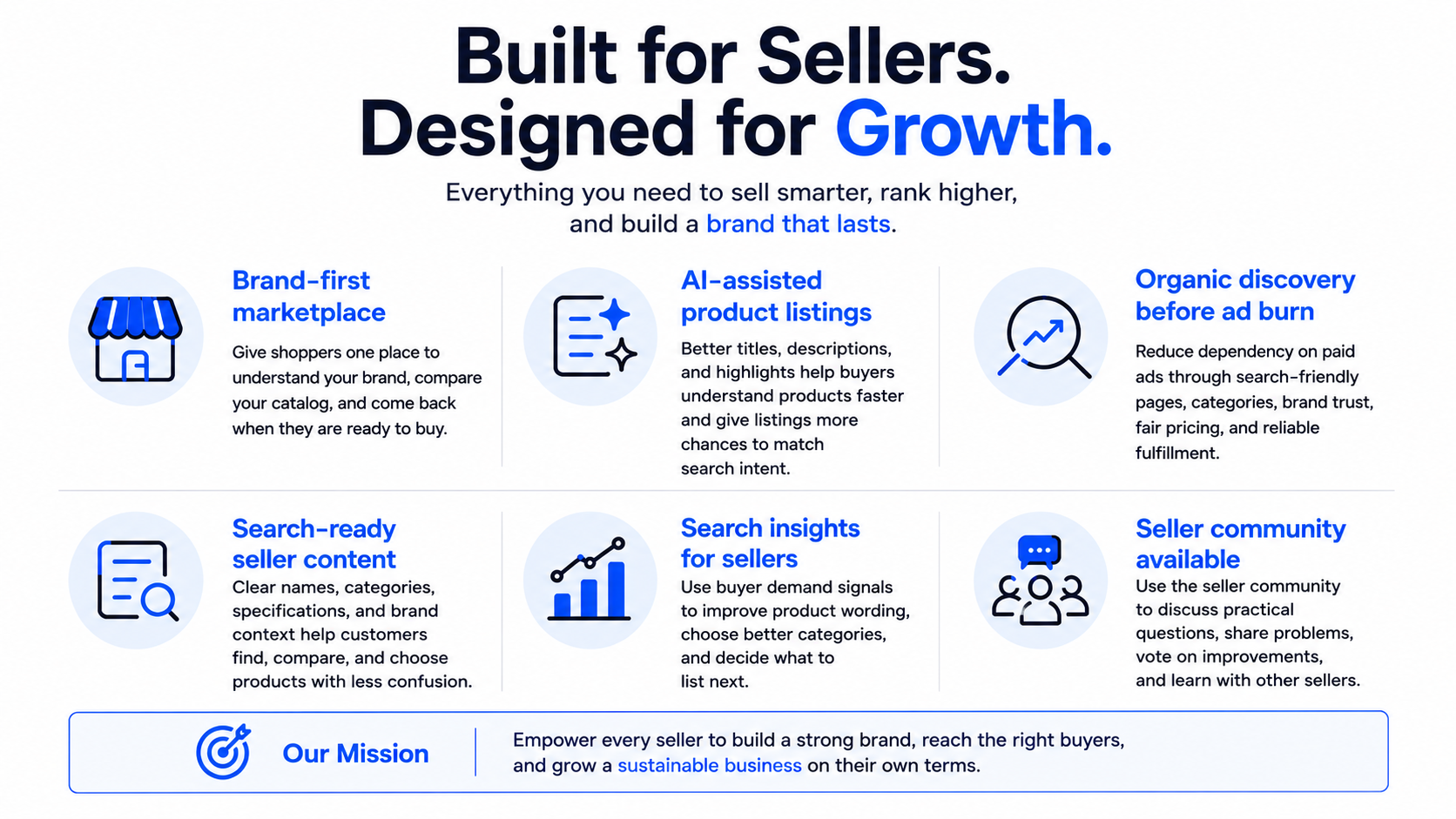
Nipher is an additional Indian B2C marketplace for sellers who want a customer-facing brand presence and another place for shoppers to discover their products. Sellers can review the Nipher seller overview, learn about the seller growth features, and follow the step-by-step Nipher registration guide. These pages explain the current seller workflow and platform features.
Think of Nipher as one possible sales destination in a broader channel mix. A seller can continue evaluating its own website and other marketplaces separately. Before relying on any tool for cross-channel stock, order, advertising, or customer-data synchronization, confirm that the specific integration exists and covers the seller's use case. Nipher does not guarantee sales, ranking, or a particular return on marketing spend.
A practical way to choose
Start with the channel that matches your current capacity. If you need to validate demand and do not yet have an audience, a marketplace can provide a structured route to listing products and reaching shoppers. If you already have repeat customers and a reliable traffic source, an owned site can give you more room to build a direct brand experience. Many businesses start with one channel and add another after they can handle the extra operations.
Review the decision monthly using product-level contribution, not only gross sales. Update fees from official seller pages, include returns and advertising, and check that stock and fulfilment processes can support every active channel. You can also compare the wider ecommerce platform options for sellers before committing to a setup.
Frequently asked questions
Is it better to sell on Flipkart or my own website?
Neither option is best for every business. Flipkart can provide marketplace discovery and seller workflows; an owned website offers greater control but requires the seller to build traffic and manage more of the customer journey. Compare the costs and contribution from your own orders.
What fees should I include when comparing marketplaces?
Check the current category or referral fee, fixed or closing fees, payment collection charges, shipping or fulfilment fees, optional services, taxes, and return-related costs. The exact items and rates depend on the platform and the seller's setup, so use official calculators and settlement records.
Does an owned website mean there are no selling fees?
No. It usually avoids a marketplace referral fee, but it can still have subscription, payment processing, hosting or app, shipping, returns, marketing, and maintenance costs. Include those expenses when calculating the margin from a direct order.
Can I sell through multiple channels at once?
Yes, if your team can keep inventory, pricing, dispatch, and customer support accurate across them. Before adopting an integration tool, verify that it supports the exact channels and workflows you plan to use.
What is Nipher's role in this comparison?
Nipher is an additional marketplace where Indian sellers can present products and build a customer-facing seller or brand presence. Review Nipher's current seller information for available tools and eligibility, and evaluate it alongside the channels you already use.
Sources for current platform details
Flipkart: [Fees and commission](https://seller.flipkart.com/fees-and-commission). Amazon India: [Fees and pricing](https://sell.amazon.in/fees-and-pricing). Shopify India: [Plans and pricing](https://www.shopify.com/in/pricing). Always confirm rates and terms on the provider's current page before listing or repricing products.
Choose channels using real order economics, current fee schedules, and the operational capacity of your business.